AI in Your Life · Try This Today
My AI museum guide: what happened when I asked Claude about 500-year-old art
By Amanda Holden · Nov 2, 2026 · 5 minute read
AI While You Travel, Part 1 of 2
I am not an audio guide person. I know, I know. It's the grown-up way to see a museum: headphones on, nodding solemnly at Room 14. But audio guides are too structured for me. I want to wander, stop at whatever grabs me, and walk past the rest without a flicker of guilt.
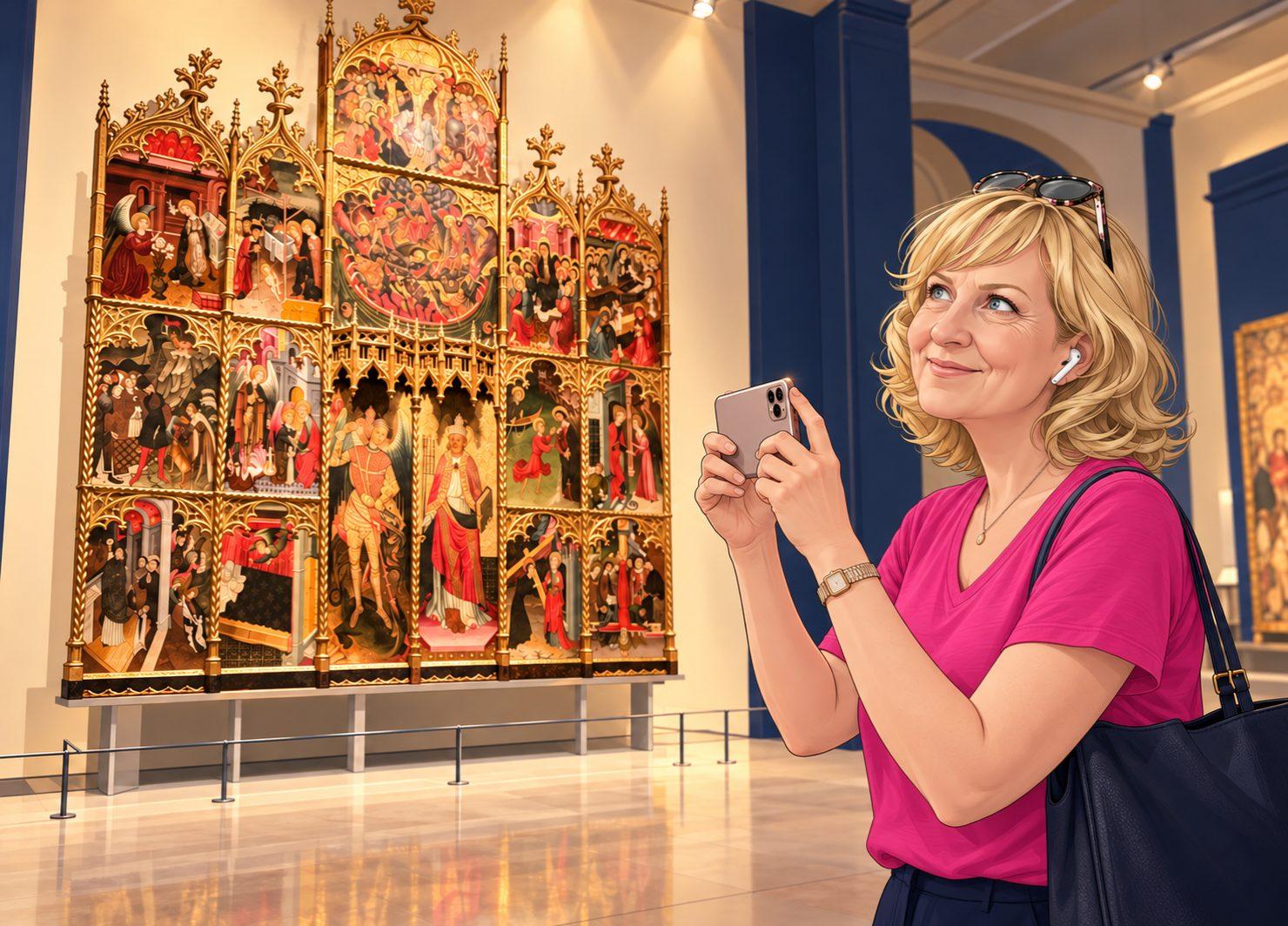
So there I was at Barcelona's national art museum (MNAC), in a room absolutely stuffed with gold, saints and dragons, holding a museum app that was, let's say, not helping. And I had no idea what I was looking at.
Then I did the thing I've been telling you to do for months. I asked AI. And friends, I was delighted. Properly, grinning-at-a-wall-of-saints delighted.
Here's the confession: I use AI every single day. I thought I'd seen what it could do. Turns out I hadn't, not like this.
The secret ingredient: AirPods and Claude Voice
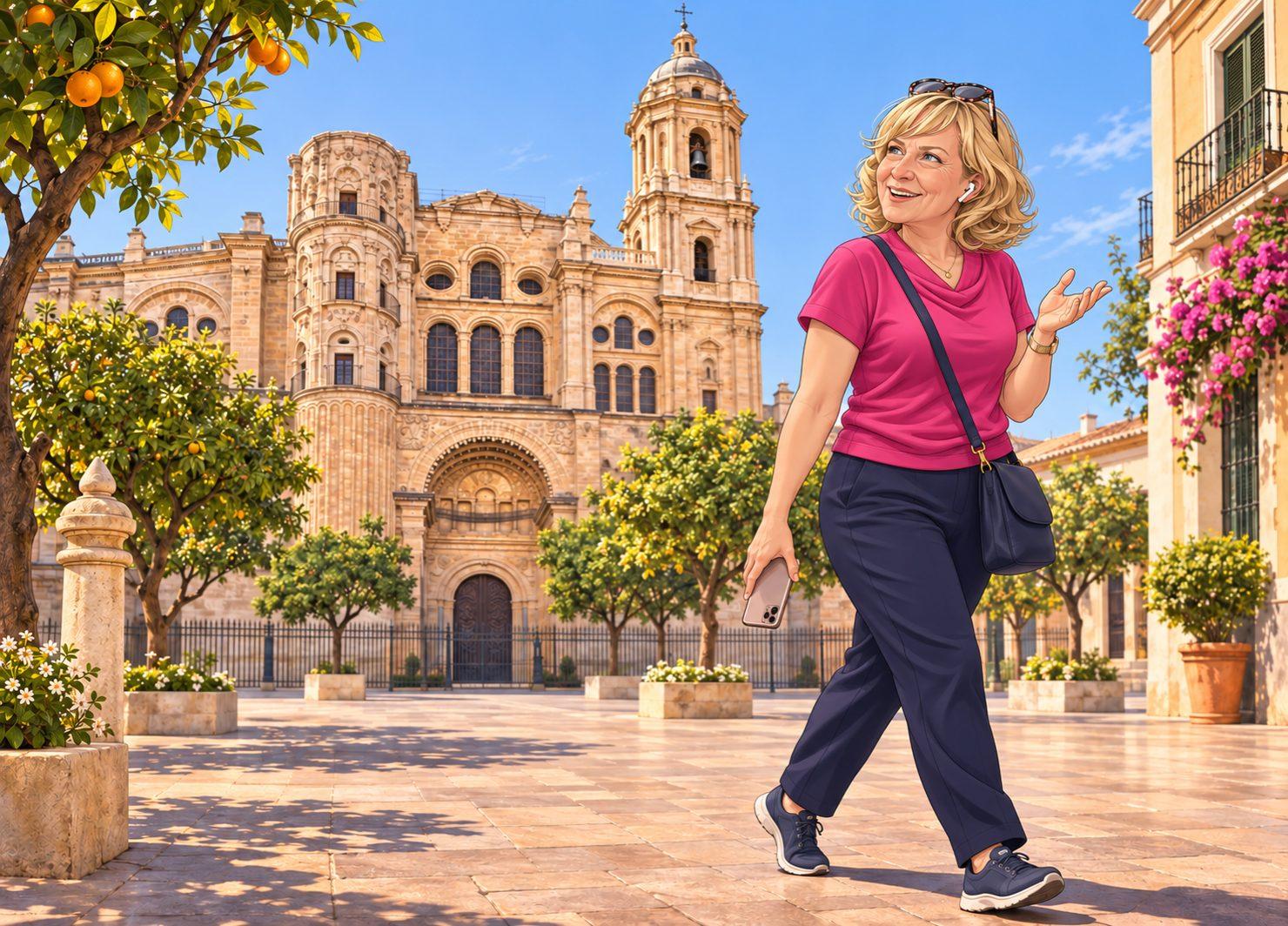
I popped my AirPods in, opened Claude and started talking. Out loud. In a museum. (Quietly, of course.)
No typing, no squinting at my screen, no looking like a tourist glued to a phone. I could keep my eyes on the art, keep my hands free, and just chat, like a friend was walking round with me whispering in my ear. A friend who knows everything about Catalan art and never once says "as I was saying in Room 3."
I'd say my little question, hold up my phone for a photo when I wanted Claude to see something, and carry on wandering. I enjoyed it so much I'm slightly embarrassed about how long I kept chatting.
What actually happened
I started wide. One photo of a huge gilded altarpiece and one important line: "I'm at the national gallery in Barcelona. Tell me about this." Seconds later I knew it was the Altarpiece of Saint Michael and Saint Peter by Jaume Cirera, painted in 1432–33 for a church in La Seu d'Urgell, and how to read its panels like a storyboard.
Then a simple question. A painting of a man being crowned with a bishop's mitre. "Who's this?" Answer: the Consecration of Saint Augustine by Jaume Huguet, plus what to look for up close. I leaned in to see the raised gold relief. The woman next to me leaned away.
Then the question I'd never ask a human guide. "What is Byzantine art?" No sighing. No pause while someone decides how much I know. Just a plain-English answer that connected to the rooms I was already walking through.
Then I got sent to do homework. When Claude couldn't be sure who painted a set of panels, it asked me to photograph the label. (Humbling. The AI asked me to read the sign.) That unlocked the real story: they were organ doors from a cathedral, painted on canvas so they were light enough to swing open. Organ doors! I would have walked right past.
The elephants. They were oxen.
In front of a 1540s Brussels tapestry, Claude told me the animals pulling Fame's chariot were probably elephants. I nodded like I'd have known better. Then I sent a close-up of the weaving, and Claude looked again and corrected itself: horns. Oxen.
The same close-up got me the Latin inscription, translated: Fame raises the outstanding up again after death, and knows nothing of Lethe, the river of forgetting. I would have strolled straight past that too. Look at me learning, enjoying and grinning ear to ear as I use AI.
So here's my lesson, and it's a good one. AI guesses from what it can see. Better pictures plus the label means better answers, and when it sounds very sure, it's perfectly fine to say "look again." To be fair, we were both wrong for about a minute. Elephants, oxen, who's counting.
Lunch with my private guide
Halfway through I took a break in the museum café with a fresh brioche filled with Spanish jamón (a very good decision) and the conversation just kept going. Why the museum matters. Who the big names are. What makes the Romanesque collection so famous. Who Gaudí was (yes, there's Gaudí furniture upstairs).
It was like a private guide sitting across the table from me, one who never got tired of my questions and never needed a coffee break. I did the eating. Claude did the explaining. A fair division of labour.
Why this matters
I didn't hand my visit over to a machine. I looked harder. I noticed the raised metal on Saint Michael's armour, the silk catching the light in a tapestry that's nearly 500 years old, a Latin line I'd have walked straight past. AI didn't replace the art. It gave me a way in.
And one more thing, since I've now tried both: for history and good conversation, I found Claude better. For maps and logistics, ChatGPT wins. Hang on for part two next week.
Try this on your next visit
- Put your AirPods in and talk. Voice made it feel like a conversation, not a search. This was the big discovery for me.
- Tell it where you are: "I'm at the X museum in Y." It helps enormously.
- Photograph the whole work first, then the label, then a detail you're curious about.
- Ask the questions you'd feel silly asking out loud.
- Ask "what should I look for up close?" That's where the magic was for me.
- Check anything important against the museum label or website.
- Be curious, enjoy.
Travelling? Sort your data before you go
Every moment above ran on me sending photos, wide shots and close-ups and labels, to an AI. That only works with decent mobile data, and "free wifi, probably" is not a plan.
I use Airalo, an eSIM you install on your phone. Here's my actual setup, not a promise it will work for you everywhere:
- One regional plan covers many countries. I bought a Europe plan and it followed me across borders. I added a separate one for Bermuda.
- I choose a fixed amount (10GB) over "unlimited." Unlimited plans tend to slow down after a certain point, and I'd rather know exactly what I bought and top up if I need to.
- It's data only. No phone number, so no regular calls or text messages. Keep your home SIM or an app like WhatsApp for those.
- Install it before you leave, on home wifi, so you're not figuring it out at the airport.
Fast data is a high priority for me when I travel. Next week I'll show you exactly why.
Consider it decoded.
– Amanda

stay curious, Amanda